

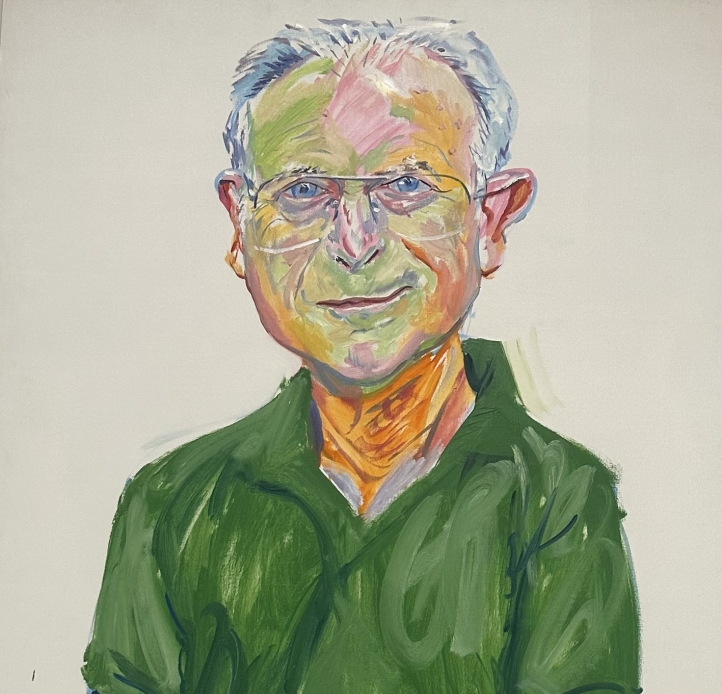
The Sid and Bea Parnes Creativity Collection
The Sid and Bea Parnes Creativity Collection tells the story of how one spark of imagination grew into a global movement for creativity. Located on the second floor of Butler Library at Buffalo State University, the collection highlights the people, ideas, artifacts, and community that helped shape the modern study and practice of creativity.
As you move through the space, allow this guide to operate as your online docent to learn more about the stories behind the artifacts, discover the rich history of each section, and explore how creativity continues to evolve today.
At the end of your experience, visit our "Ask the Archive" for more surprises and the chance to color the world in creativity.
The Divine Spark
Applied Imagination
Before creative thinking and brainstorming were household words, there was one man who held a radical idea and belief: creativity was an innate gift for all, one that could be developed intentionally. He called it a divine spark. His journey to this belief started almost one hundred years ago. Based on his belief that imagination was a skill that could be exercised, strengthened, and taught, he set out to prove it. He coined the term “brainstorming,” and in 1953, he published Applied Imagination, a book that introduced Creative Problem Solving to the world. More than 50,000 copies were printed between 1953 and 1956, and were later translated into German, French, Spanish, Italian, and Japanese.
The book was the product of Alex’s divine spark. From the content on these pages grew a model for solving complex challenges, a creative foundation, a university program, a global conference, and a discipline studied for academic credit. Applied Imagination remains one of the most frequently cited books on the creative process.
The process to create such a life-changing text was no easy feat. It required discipline and motivation, but his spark carried the journey, and he continued to write other books.
"I believe that all of us are endowed with a divine spark, and that that spark is our creative imagination. By implementing it with willpower, we can acquire a habit of creative effort. And to my mind, creative effort is the key to a good life."
Alex Osborn | Interview with Edward R. Murrow on This I Believe
Featured Artifacts:
• Applied Imagination record and cassette tapes with text transcription
• Parnes's hand-annotated introduction and reflections to Applied Imagination
• First-edition materials and handwritten chapters
• Promotional printing proofs
• "This I Believe" speech original transcription
The Work They Carried Together
How one idea became a field of study
In 1954, after the widespread influence of Applied Imagination, Osborn established the Creative Education Foundation. With Dr. Sidney J. Parnes, he developed the Osborn–Parnes Creative Problem Solving Model. It is still regarded as a gold standard and the basis for many process iterations. Together, Parnes and Dr. Ruth B. Noller developed a method to teach and test the model, bringing the work to the university and founding what is now the Center for Applied Imagination, where creativity became an academic discipline. Although their journeys were met with resistance and complications, their shared belief was the fire that pushed the movement.
The progression was rooted in the collaborative and collective work of the three founders. What began with Osborn as he created new ways of thinking and a revolutionary field, he and Parnes turned that method into a complete, teachable process. Through their deep collaboration, Parnes and Noller further forged the work into an academic program. The relationships among the three were characterized by mutual respect, encouragement, and collective learning, as they elevated one another to new heights and had a creative impact on the world.
A co-founder of BBDO, one of the country’s largest advertising agencies, Osborn coined and developed the deliberate creative-thinking method he called “brainstorming.” Convinced that creativity was not only an innate gift but a skill that could be developed, he tested his methods at BBDO and set them down in a series of books. His work culminated in Applied Imagination (1953), followed by the founding of the Creative Education Foundation in 1954, which brought the work into schools, and of the Creative Problem Solving Institute (CPSI), to share training in the method.
Before his success in the field, Osborn's path was not without setbacks. His pivotal transition into creativity and creative studies came after he was fired from a newspaper job in Buffalo and was hired elsewhere because an editor noticed that his early, amateurish pieces each contained an “idea”. This event served as a catalyst for Osborn, leading to a profound realization of the value of a single idea. After two years of work at the paper and with the help of his father’s counsel, he made a courageous pivot into the riskier field of advertising, where his sharp mind and propensity for creativity served him well.
A scholar, a visionary, and one of the most beloved educators the field has known. After meeting Osborn at the first Creative Problem Solving Institute in Buffalo, Parnes became his closest collaborator, and together they developed the Osborn–Parnes Creative Problem Solving Model and shared it with the world. But Parnes's gift was as much human as intellectual: he gave the institute its enduring spirit of deferred judgment and unconditional support, and generations of students remember him for his warmth, wit, and generosity. In 1967, he established the creativity program at Buffalo State that became a permanent department; he assembled one of the world's largest creativity libraries, the collection displayed among these shelves, launched the scholarly Journal of Creative Behavior, and published more than a dozen books. With Osborn, he made the far-sighted decision to place Creative Problem Solving in the public domain, so that anyone, anywhere, could use it. He served for decades as president and lifetime trustee of the Creative Education Foundation.
Ruth Noller's life was full of beginnings. She taught herself the violin at six, graduated high school at sixteen, and earned a degree in mathematics, with minors in science and music from the University of Buffalo at nineteen. During World War II she served in the Naval Reserve as a mathematics and engineering officer, and one of her first assignments made history: she became one of the earliest women computer programmers in the United States, working on Harvard's Mark I, the room-sized machine that stood among the first modern computers. She brought that same rigor to the emerging field of creativity. With Parnes she led the Creative Studies Project (1967–1972), a landmark study showing that creativity training measurably improved students' thinking and problem-solving: evidence that helped establish the permanent creativity programs at Buffalo State. She is best known for her Formula for Creativity, C = fa(K, I, E): creativity as a function of Knowledge, Imagination, and Evaluation, activated by a creative attitude. Beyond her research, she was remembered as a gifted mentor and motivator, the kind of teacher whose students simply liked being around her. A fun aside: she was also a lifelong collector of bells, with more than 2,300 gathered from around the world.
• Portraits of Ruth B. Noller, Alex F. Osborn, and Sidney J. Parnes
• Creative Education Foundation's CPSO Hall of Fame
• Creative Education Foundation pamphlet
• Instructor's Manual for courses in CPS
• Creative Thinking first semester book UNI. of Buffalo- 1954
• Casette tape of Visionizing by Sidney J. Parnes with music by Bill Hartwell
• Toward Supersanity by Sidney J. Parnes and Ruth B. Noller
• Scratching the Surface of Creative Problem Solving by Ruth B. Noller
View the Igniting Creativity cartoon below.
The Man behind the idea
A life lived in creative color
The field Osborn founded took on a life of its own. The man never stopped creating. He wore many hats and embodied the essence of a Renaissance man. This cabinet steps away from the public legacy to show the private person: a husband and father, a painter, a writer, a sketcher of ideas, and an adopted Buffalonian.
Osborn, a native New Yorker, fell in love with Buffalo, where he decided to settle and raise a family. Preferring to live in Buffalo, he commuted to New York to work at BBDO during the week and returned home on the weekends.
Alex and his wife, Helen, were partners through a full life of family and big ideas. While Alex carved out a creative life for himself, Helen was his pillar and his haven; he wrote letters to his children from the road and when they were away at college. For Osborn, creativity was first ignited at home, and he often reflected on creative parenting. He lived out his convictions and passions with generosity and grace, championing others.
• A news article cover featuring BBDO and a birthday card signed by his employees and colleagues at BBDO
• Formal portrait of Alex Osborn and family photographs, including a picture on the golf course with wife, Helen
• What’s Right About Buffalo book and a first edition of How to Think Up (1942)
• Osborn’s own pencil notebook sketches, featuring, “Ideas Are Gold”
• An album of his paintings and an original pencil and charcoal sketch titled, The Widow
• Newspaper clip announcing his award of the Chancellor’s Medal
The World Writes Back
The brainstorm boom
As brainstorming spread, the mail came back to Buffalo from everywhere. Factories, advertising agencies, oil companies, the armed services, and federal agencies all wrote to Osborn about putting his method to work. The United States Army and Air Force began implementing Creative Problem Solving techniques and using workbooks and seminars for training.
At an H. J. Heinz factory, brainstorming sessions tackled real production problems. Hallmark trained its writers on Osborn’s book. Engineering students at the General Motors Institute, who shared Osborn's concern for creativity in engineering education, wrote in to say so.
The level of correspondence and connections with Henry Ford II, Earl Warren (Governor of California and later Chief Justice of the Supreme Court), Richard Nixon (during his Vice Presidency), Lyndon B. Johnson, and Presidents Herbert Hoover and Dwight Eisenhower.
The enthusiasm reached far beyond these examples. Companies, including The New Yorker, Prudential, IBM, Phoenix Mutual Life, and Fidelity Mutual Life, along with organizations such as the Fire Association of Philadelphia, wrote in with curiosity and eagerness to put the methods to work in their own training. Applied Imagination entered the classroom as well, taught as a course at Columbia University and Western New England College, and the interest crossed borders, with television programs on brainstorming reaching audiences in Canada. The impact of the work was extraordinary.
To learn more, visit the archival page below.
• Letters from Hallmark Cards, H.J. Heinz, IBM, and the General Motors Institute Creative Engineers Club
• Correspondence and signed picture from the White House
• A greeting card from the Helen Keller World Crusade for the Blind
• Newspaper clippings featuring the power of Brainstorming and Brainstorming booklets
The Spark Kindled
How a community formed around the work
The power of Osborn's work and the collaborative efforts of Parnes and Noller ignited the spark in others, and the creative movement grew. In 1955, the Creative Education Foundation (CEF) put on the first-ever Creative Problem Solving Institute (CPSI). Attendees and presenters gathered in Buffalo and never stopped. This gathering is what led Sid to Alex and ignited a partnership that would change the world. CPSI is not only the first, but also the longest-running creativity innovation conference in the world. Attendees describe it as more than a conference, part laboratory, part reunion, part family.
Sid and Bea Parnes were at the heart of this movement. Together, they carried the principles of deliberate creativity, the balance between divergent and convergent thinking, and the belief that everyone can learn to be creative, to communities far beyond Buffalo. Their travels brought workshops and training across North and South America, Europe, Asia, Africa, and Australia, introducing creative problem-solving to leaders in every domain. Sid often remarked that his wife, Bea, was his indispensable colleague, life companion, and dearest friend. After Sid's passing, Bea founded the Sidney J. Parnes Global Fellowship to keep his spirit, work, and impact alive in others and inspire them with the power of creativity.
Creative Problem Solving (CPS) is a proven, deliberate method for approaching problems or challenges in an imaginative way. It helps you redefine what you face, generate new responses, and then take action. CPS rests on two assumptions: that everyone is creative in some way, and that creative skills can be learned and strengthened. At its heart are two kinds of thinking. Divergent thinking, the phase most people know as brainstorming, generates many ideas and pushes past the obvious. Convergent thinking then screens, evaluates, and refines those ideas into workable solutions while preserving what makes them novel. We all do both every day without realizing it. Organized into four stages, CPS simply makes the process deliberate: Clarify, Ideate, Develop, and Implement.
• The Third Annual CPSI program (1957) and a selection of annual institute programs
• The personal notebook with writing by Sid Parnes, and a picture of Sid and Bea together
• An engraved Creative Education Foundation membership invitation
• Photographs of CPSI sessions and the “My First CPSI” reflections
• A Buffalo newspaper feature naming the city a world center for creative problem solving
The Future Of Creativity
Where will your spark take you?
What began with Alex Osborn, and was shaped through years of close collaboration with Sidney Parnes and Ruth Noller, alongside many other invaluable contributors such as E. Paul Torrance, J.P. Guilford, and many more, continues to evolve today. At Buffalo State's Center for Applied Imagination, scholars, students, and practitioners are exploring new questions: creative leadership, innovation, well-being, creative preferences, and the relationship between artificial intelligence and human imagination. A few of the current works of our faculty and department members are featured here.
Throughout this collection, you have followed the journey of the belief in a divine spark of imagination. You met the people who believed creativity could be studied, taught, and shared. You saw their work spread from Buffalo to businesses, schools, governments, and communities around the world. You discovered a movement that is still growing.
Now the story reaches its next chapter. You.
What will you do with your spark?
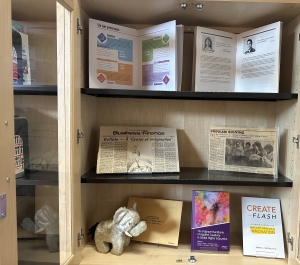
• FourSight Thinking Profile Pamphlet by Dr. Gerard Puccio, Sarah Thurber, Dr. Blair Miller, and Russ Schoen
• Create in a Flash by Dr. Roger Firestien
• The Palgrave Handbook of Applied Creativity in Global Higher Education, edited by Gerard J. Puccio, Amanada Lohiser, Camille A. McKayle, and Frederik Hertel
• CPS bots by Dr. David Yates, Mikhaila Ackerbauer, Scott Jesmore, Faizan Kazani, and Chris Von Spitzer
• Torrance Tests of Creative Thinking artifact and stuffed elephant
• Newspaper clippings featuring Buffalo as the center for imagination
• Creative Leadership Skills That Drive Change by Gerard Puccio, Mary C. Murdock, and Marie Mance
• And more to come!
Try Creative Problem Solving for yourself. These chatbots walk you through a real CPS session, and each one connects to its section of the companion guide so you can follow along.
The Future Of Creativity
Where will your spark take you?
What began with Alex Osborn, Sidney Parnes, and Ruth Noller continues to evolve at Buffalo State University today.
Learn where creativity can take you!
The Future Of Creativity
Where will your spark take you?
What began with Alex Osborn, and was shaped through years of close collaboration with Sidney Parnes and Ruth Noller, alongside many other invaluable contributors such as E. Paul Torrance, J.P. Guilford, and many more, continues to evolve today. At Buffalo State's Center for Applied Imagination, scholars, students, and practitioners are exploring new questions: creative leadership, innovation, well-being, creative preferences, and the relationship between artificial intelligence and human imagination.
Throughout this collection, you have followed the journey of the belief in a divine spark of imagination. You met the people who believed creativity could be studied, taught, and shared. You saw their work spread from Buffalo to businesses, schools, governments, and communities around the world. You discovered a movement that is still growing.
Now the story reaches its next chapter. You.
What will you do with your spark?

Your Spark Ignited
Let's color the world in creativity together. Share how you are using your spark and where you are from!
Color in the Map
The Curiosity Cabinet
Check out our special features and be sure to open each drawer for new surprises.
Visit The Curiosity Cabinet