

Creativity Scholars and Works
The field of creativity has been shaped by the vision and scholarship of many pioneers. Here you’ll find biographical summaries and key materials that highlight their lasting impact. We are proud and pleased to share audio recordings of speeches delivered by some of the key pioneers in the field of creativity. These recordings were captured between 1950 and 1975 at the Creative Problem Solving Institute and a creativity series conducted at the Cooper Union Institute. We express deep appreciation to the Creative Education Foundation and the Cooper Union for preserving and sharing these historical recordings. We refer to this collection as the Mid-Century Suite as these speeches were featured in an Oxford University Press publication called The Mid-Century Creativity Reader. Edited by Gerard J. Puccio, Vlad P. Glăveanu, Jo Yudess and Matei Schwartz, this book features these historical speeches along with commentary by contemporary creativity scholars.
PART ONE: THE NATURE OF CREATIVITY
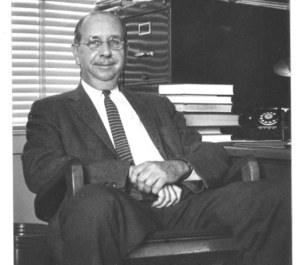
Donald MacKinnon
After earning his Ph.D. from Harvard in 1933, Donald MacKinnon taught at the University of California, Berkeley. While at Berkeley, he was known for teaching the psychology of creativity and became the founding director of the Institute of Personality Assessment and Research from 1949 to 1970. He was also the president of the Division of Personality and Social Psychology from 1951- 1952 and the Western Psychology Association from 1963 – 1964. MacKinnon stayed active in the field late into his life, and in 1973, started a one-year stint as a visiting fellow at the Center of Creativity Leadership and an adjunct professor in Psychology at The University of North Carolina, Chapel Hill.
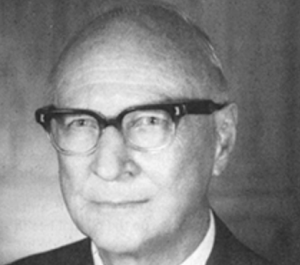
J.P. Guilford
Joy Paul Guilford was an American psychologist best known for his work on the psychiatric study of human intelligence, including the distinction between convergent and divergent production. He studied and graduated from Cornell University under Edward Titchener, who was credited with founding the first psychological laboratory in the U.S. It was at Cornell that Guilford began testing his theories and started by administering intelligence questionnaires to children. He understood that intelligence is not defined by a single score but involves multiple interrelated sets of abilities that vary from person to person. His view on traditional IQ tests was that they did not favor divergent thinking and eventually led him to develop the idea of “divergent intelligence.” He was one of the first psychologists to consider that the idea of intelligence was not a unitary concept. Today, Guilford’s groundbreaking work is still studied and revised through developmental psychology, neurology, and artificial intelligence.
Listen to "Investigation of the Structure of Intellect Model"
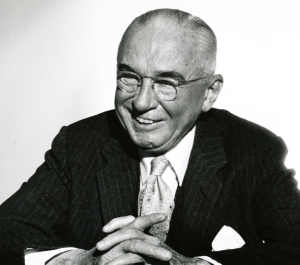
Alex F. Osborn
Alex Osborn, famously known as the “father of brainstorming,” was a businessman, artist, and intellectual who authored many works on creativity and creative thinking. One of his most recognized works is Applied Imagination, published in 1953. Before delving into the world of creativity, he would join with Bruce Fairchild Barton and Roy Sarles Durstine to form the BDO advertising agency in 1919. The three men would later merge with George Batten in 1939 and rename the agency BBDO. That same year, Osborn would be recorded at BBDO to create the concept of “brainstorming sessions.” Osborn remained at the company as vice-chairman until his retirement in 1960. In 1954, Osborn, along with Sidney J. Parnes, a fellow gifted mind, developed the “Osborn–Parnes Creative Problem-Solving Process” (CPS). Since its creation, this popular process has been widely used across many professions and institutions for project development, goal identification and pursuit, and overcoming complex challenges. When away from his work, Osborn remained creative by painting, adding to his scrapbooks, and spending time with beloved animals. His work lives on through the Creative Education Foundation's Creative-Problem Solving Institute and their annual conference, which has become the longest-running creativity conference in the world.
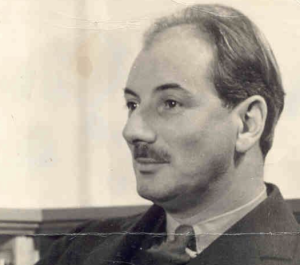
Lewis Mumford
Lewis Mumford was a historian, writer, philosopher of technology, literary critic, and more, but if asked, he would prefer to call himself a “writer and architectural critic.” Mumford studied at the City College of New York and The New School for Social Research after graduating from High School in 1912. A short illness caused by tuberculosis prevented him from finishing his degree. By 1919, he had served a year in World War I and accepted a position as associate editor of The Dial, a modernist literary journal of the time. He later became an architecture critic for The New Yorker magazine, a position he held for more than 30 years. Mumford became concerned with the importance of human limits in nature and was an early critic of nuclear weapons in 1946 and the U.S. involvement in Vietnam in 1964. His works are dedicated to recognizing this human impact on the natural world and advocating for a more organic purpose. Many of his papers are stored in Philadelphia at the Van Pelt Library of The University of Pennsylvania, and his library and creative works are stored at the library of Monmouth University in New Jersey.
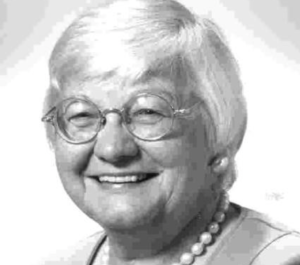
Ruth B. Noller
Ruth Noller received her Bachelor’s, Master's, and Ph.D. from the University of Buffalo. She joined the Navy WAVES in 1944. Stationed at Harvard University as a Mathematics-Engineering Officer for the IBM Automatic Sequence Controlled Calculator, she was the second woman programmer in the U., working with Admiral Grace Hopper, who was the first. She taught mathematics at the University of Buffalo (SUNYAB) from 1943 to 1944 and from 1946 to 1971. In 1964, she started her career in Creative Education as a research assistant at SUNYAB’s Millard Filmore College. In 1967, the State University College at Buffalo (now Buffalo State University) became the home of Creative Studies. As co-director, she taught in the undergraduate and graduate programs. With Sidney Parnes, she conducted the seminal Creative Studies Project, indicating that creativity could be taught. She studied mentoring and mathematical creativity formulating creativity in mathematical terms. She retired in 1982 as a Distinguished Professor. She served as the first editorial chairman of the Journal of Creative Behavior and Assistant Director of the Creative Education Foundation’s Creative Problem-Solving Institute.
Listen to "Seminar in Creative Studies interview of Ruth B. Noller."
PART TWO: HISTORICAL AND CULTURAL PERSPECTIVES ON CREATIVITY
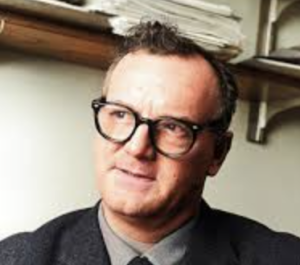
C. Wright Mills
Born in Texas, Charles Wright Mills moved constantly throughout his childhood. In response to the isolation he experienced, he threw himself into his studies, graduating from the University of Texas with an MA in Philosophy and a BA in Sociology. Before graduation, he was published in two leading U.S. sociology journals. Mills received a Ph.D. in Sociology from the University of Wisconsin in 1942, while working as a professor or research associate at several colleges and universities and receiving grants for many of his works. He was published in several journals and authored eight books - all while teaching and traveling. While working on one of his books, he spent time in Cuba, where he interviewed President Fidel Castro, who claimed to have studied one of Mills' texts, The Power Elite. Mills was remembered as a man in a hurry, for his combativeness, and sometimes described as “tumultuous.” He suffered many heart attacks and passed at the young age of 45. His children continued his legacy by printing a series of letters and other works their father had left unfinished.
Joseph Campbell
Joseph Campbell was an American professor of literature and writer who started his journey studying biology and mathematics at Dartmouth College. It was not long into his studies that he realized his true passion was for the humanities, so he made the brave shift to Colombia, earning a Master of Arts in Medieval Literature. On top of his studies, he earned the award of Accomplished Athlete in track and field, being recorded among the fastest half-mile runners in the world at the time. Campbell also received a fellowship from his alma mater to study abroad in Europe. Upon his return, he was met with a lack of support to continue studying in his field of interest, the humanities. This issue led him to drop out of his graduate program and engage himself in a rigorous independent study for the next five years. He then accepted a position at Sarah Lawrence College to teach his love of literature. Campbell authored dozens of articles and other books, and in 1985, two years before his death, he was awarded the National Arts Club Gold Medal of Honor in Literature.
Listen to "Philosophical Concepts of Creativity in the Orient"
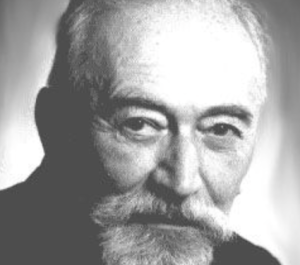
Moses Hadas
Moses Hadas grew up in an Orthodox Jewish family, studied rabbinic training at the American Jewish Theological Seminary, and received his doctorate in classics in 1930. Fluent in 7 languages, he knew others. Later in life, he officiated at weddings as a rabbi, often between Jews and non-Jews. During his tenure at Columbia University, he defied the classical teaching methods of textual criticism and grammar, presenting the classics in translation as literary works, finding that students retained what they learned in English and then could discuss ancient works. He illustrated the importance of this in text and talks with colleagues. Ahead of his time, he liked using television as an educational tool, becoming a lecturer on broadcast television to spread the classics to a broader audience. He received Columbia’s Great Teacher Award in 1955 and the Student-to-Teacher Mark Van Doren Award in 1964. A skilled translator from Greek, Latin, Hebrew, and German, he produced many editions of texts but is best known for his work with ancient literature and for his efforts to spread classical culture. Translator, scholar, builder of cultural bridges, charismatic teacher, and with a strong sense of mission, he was reticent to make himself well known.
PART THREE: ASPECTS OF THE CREATIVE PERSON
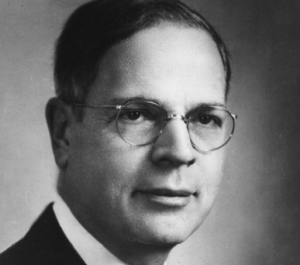
Gardner Murphy
Gardner Murphy received his bachelor’s degree from Yale University in 1916 and his masters from Harvard University in 1917. He continued his studies at Columbia University to earn his Ph.D. in 1923. Murphy was a full professor at City College in New York and served as chairman for the department of psychology from 1940–1952. He became director of research with the Menninger Foundation, where he remained until 1968. Murphy was a board member and the president of the American Psychological Association. He was a member, vice president, and then president of the American Society for Psychical Research. He was an editor of the Journal of Parapsychology. Murphy participated in the First International Utrecht Conference on Parapsychology in the Netherlands in 1953, put on by the Parapsychology Foundation of New York City. He was among the first researchers to conduct scientific experiments on telepathy, clairvoyance, and other extra-sensory powers. Murphy was a prolific author credited with the publication of many psychology books, still cited as valuable research and essential to teaching in the field of parapsychology.
PART FOUR: CREATIVE THINKING AND PROBLEM SOLVING
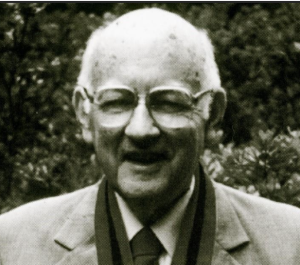
E. Paul Torrance
E. P. Torrance graduated from several universities and eventually earned his doctoral degree from the University of Michigan. He remained in academia, teaching psychology from 1957 to 1984, but was best known for his research on creativity. He would go on to publish thousands of articles, dozens of books, and collaborate with other authors on many volumes. Torrance would also create the Future Problem-Solving Program International, the Incubation Curriculum Model, and the Torrance Tests of Creative Thinking. In 1984, the University of Georgia would set up the Torrance Center for Creativity and Talent Development, and his legacy would not stop there. Following his death in Istanbul in 2015, Turkey launched the annual E. Paul Torrance International Roundtable on Creative Thinking.
Listen to "Increasing Creativity"
Listen to "Teaching Creativity: Administration of a Creativity Test"
Listen to "Findings of Recent Research on the Development of Creativity"
Sidney Parnes
Sidney J. Parnes, commonly referred to as Sid by his family and friends, was considered the world’s leading expert on creativity, innovation, and problem-solving. Together with Alex Osborn, they would co-found the Creative Problem-Solving Institute in 1955 and develop the Osborn/Parnes Creative Problem-Solving method. This procedure is still taught at all creative problem-solving institutes and used by various industries to develop imaginative solutions to problems, issues, or concerns. Among his many accomplishments, Parnes was responsible for assembling the largest library on creativity housed at the Buffalo State Library. The collection holds over 2,400 volumes on creativity, as well as the Journal of Creative Behavior that he launched in 1967. He was inducted into the American Creativity Association’s Hall of Fame in 2004, right after the Innovation Network recognized him with a Lifetime Achievement Award for his outstanding work and accomplishments in the creative movement.
Listen to "What Education Can Do to Develop Creative Behavior"
Listen to "Introduction to Creative Problem Solving, and Tribute to Alex Osborn"
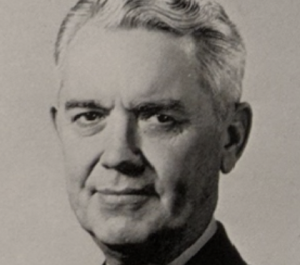
William Culp
Colonel William Culp was born in South Carolina, where he attended the local university before enrolling in the United States Military Academy. He graduated from the academy at West Point in 1932. Colonel Culp served in the United States Army throughout the world, including Australia, New Guinea, Leyte, Manila, and Puerto Rico, before retiring in 1962 after 30 years of service. He moved his family to Cincinnati to become president of the Ohio Mechanic Institute in the College of Applied Science. When the college merged with the University of Cincinnati in 1969, he became the college’s Dean. He retired in 1972. He also supported the Academy Fine Arts Fund by serving as director of planning from 1971 to 1972.
Listen to "Evaluation, Development, and Use of Creative Ideas"
PART FIVE: CREATIVITY IN ENGINEERING
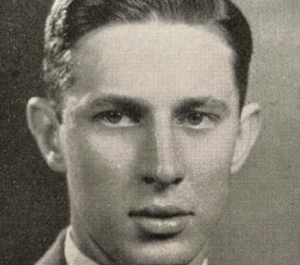
Leo B. Moore
After receiving his formal education from M.I.T. in Chemical Engineering and Management in 1937, Leo Moore became a professor of Management at the Sloan School of Management at M.I.T. During World War II, which interrupted his career, Moore continued to be recognized for his efforts as a lieutenant colonel and deputy director of signals intelligence for the U. S. Signal Corps in Europe. After the war, Moore returned to Sloan and M.I.T., where he became a member of A.H. Mogensen’s staff at his Work Simplification Conferences. He was a full professor by 1967. Along with developing and teaching courses on Industrial Standardization until his retirement in 1984, Moore oversaw, edited, and contributed to the column “Standards Outlook” in The Magazine of Standards, published by The American Standards Association, Inc. Forty-two cartons of his papers are in the archives at MIT.
Listen to "Creative Behavior in Engineering and Industrial Management"
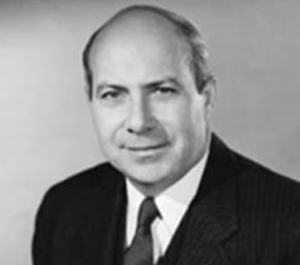
John Dunning
John Ray Dunning was an American physicist who earned his doctorate from Columbia University, where he later would become the Dean of the School of Engineering and Applied Sciences from 1950 to 1969. His research focused on neutron physics, resulting in several publications on the topic and in sharing his work with fellow nuclear physicists in Europe. While experimenting with a tool he had constructed from salvaged parts, he discovered a more powerful neutron source. Due to his expertise and innovation, he was asked to work on the Manhattan Project, where his mastery proved instrumental in the development of the first atomic bomb. After the war, Dunning held the title of Scientific Director for Construction of the Nevis Laboratories, a collaborative effort of Columbia University, the U.S. Atomic Energy Commission, and the Office of Naval Research.
PART SIX: PSYCHOANALYSIS, PSYCHODRAMA, PSYCHEDELIA & PLAY
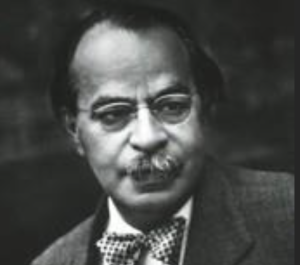
Gregory Zilboorg
Born in Ukraine, Gregory Zilboorg studied medicine and worked as a secretary under two prime ministers. He immigrated to the United States when he was 29, and the Bolsheviks came to power. He supported himself by translating Russian literature into English while studying medicine, graduating with a medical degree from Columbia University in 1926. He worked at Bloomingdale Hospital until 1931, when he established his psychoanalytic practice in New York City. He produced books on the history of psychiatry, many clinical articles, and lectured at Johns Hopkins University while treating his patients. Many of his patients were writers and poets, some as well-known as George Gershwin, Lillian Hellman, Moss Hart, Marshall Field, and even Ernest Hemingway.
Listen to "Past and Present Experience in the Creative Process"
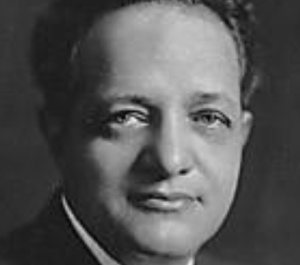
Jacob Levy Moreno
Jacob Moreno was a Romanian American psychiatrist, psychosociologist, and educator who earned his Ph.D. at the University of Vienna in 1917. He was also the founder of psychodrama, and the foremost pioneer of group psychotherapy. While he was still in school, Moreno developed a theory of interpersonal relations and tools for social sciences he called “sociodrama,” “psychodrama,” “sociometry,” and “sociatry.” He considered these a step beyond psychotherapy, meant to help people counteract materialism and move to action. He went on to introduce group therapy into prisons and schools and later established the Beacon Hill Sanitarium, renamed Moreno Sanitarium, and later, the Moreno Institute. His contributions to the field continued through the many journals he authored, and his teaching at the New School for Social Research and Columbia University. His teachings and theories remain active today, with psychodrama centers practicing across the U.S. He believed that spontaneity and creativity are propelling forces in human progress.
Listen to "The Creative Function of Psychodrama in the Open Community"
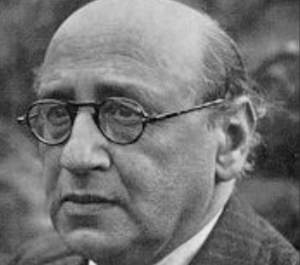
Theodore Reik
Born in Vienna, Austria, Theodor Reik was a psychoanalyst who trained as one of Sigmund Freud’s first students. During his training, Freud supported Reik and his family financially until he obtained his Ph.D. in psychology from the University of Vienna in 1912. His close relationship with Freud opened many opportunities, and the two scholars collaborated on a paper titled The Uncanny, published in 1919. On his arrival in New York, Reik was met with rejection from the fellow psychotherapist community due to not having an M.D. He used this rejection as inspiration to open one of the first psychoanalytic training centers for psychologists, the National Psychological Association for Psychoanalysis. The institution remains one of the largest and best-known of its kind in New York City. Reik also participated in one of the first lawsuits that helped define and legitimize the practice of psychoanalysis by non-physicians. Today, the psychoanalytic community widely accepts the training of these individuals, allowing patients greater access to treatment.
Listen to "Creativity as a Conscious and Unconscious Activity"
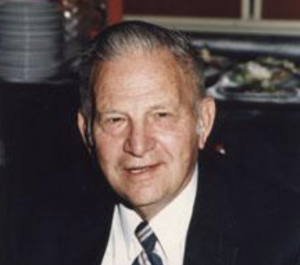
John Curtis Gowan
A Boston, MA native, John Gowan entered Harvard University early at the age of 17. After earning two degrees, working as a math teacher and counselor, and earning a Ph.D. from UCLA in 1953, he joined the founding faculty at California State University, Northridge. He taught Educational Psychology from 1953 to 1975, retiring with emeritus status. Gowan studied the creative development of children and gifted populations and, in 1958, founded the National Association for Gifted Children. His work on gifted children, child development, teacher evaluation, and creativity has been published in hundreds of articles and fourteen books. A lot of Gowan’s work is stored and made accessible by Buffalo State College’s Archives. He was interested in psychic phenomena related to human creativity and developed a model of mental development extending into extraordinary development and mystical states of consciousness. He devised a test for self-actualization called the Northridge Developmental Scale.
Listen to "Creation as the Vestibule to Psychedelia and Self-Actualization"
PART SEVEN: EDUCATING FOR CREATIVITY
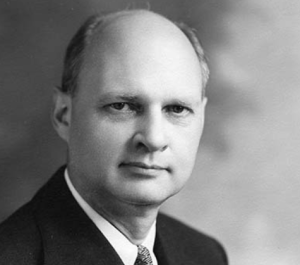
George D. Stoddard
After high school, George Stoddard worked before enrolling at Penn State and left to serve in the Army in World War I. He returned to Penn State in 1921 to earn an AB degree. He went to Paris to study child psychology at the University of Paris and received a diploma. He received his Ph.D. from the University of Iowa in 1925, taught there, served as department chair, and later as dean of the graduate school. His passion was for elementary education, and he advocated for the social value of play. He became president of the State University of New York, and Commissioner of Education in 1942. In 1946, he helped establish a new Japanese educational system with General MacArthur and then became president of the University of Illinois. After a vote of no confidence, he became dean of the Department of Education at NY University, then chancellor in 1960. In 1967, he became chancellor of Long Island University. He was a member of the board of the Lincoln Center for Performing Arts, completed an operations report for the Carnegie Corporation, and helped with programming for the Brooklyn Institute of Arts and Sciences.
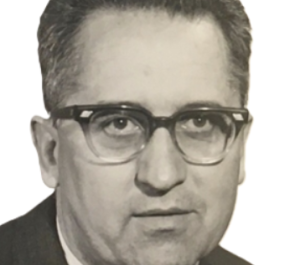
Calvin Taylor
Calvin Taylor earned BA and MA degrees from the University of Utah before leaving for the University of Chicago to get his Ph.D. in psychology in 1946. His dissertation isolated ideational fluency and expressional fluency. During World War II, he was Military Chief of Army Personnel Research in charge of performance testing, and later, as a reserve officer, he worked with Human Factors Research. In 1946, he began his teaching career at the University of Utah, teaching measurement theory, factor analysis, statistical and research techniques, creativity, personnel and industrial psychology, and others. He founded the nonprofit Institute for Behavioral Research in Creativity to address the growing interest in research on creativity. He led the National Science Foundation conferences on scientific creativity. He chaired the World Conference on Gifted and Talented and believed that all children are gifted and can lead with many talents. His work earned him recognition from the American Psychological Association, which awarded him the Richardson Creativity Award in 1970, among others.
Listen to "Creativity in Education"
Listen to "What Education Can Do to Develop Creative Behavior"
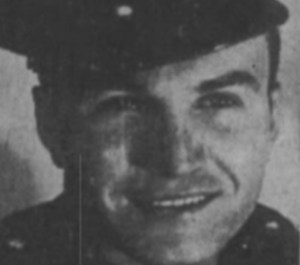
Bert J. Decker
Bert Decker started his career during World War II as a private and a radio mechanic. As a captain in a fighter command, he received a Purple Heart in 1945. Eventually, he left the Air Force to attend college and earned a master's degree in mechanical engineering before returning to duty in 1951. While making his way up the ranks, Decker’s ideas for improving the effectiveness of nuclear explosions were adopted by the Air Force. His proposal launched a $1 billion project to research and produce ion-propulsion-controlled space vehicles. For these ideas, he was awarded the SAC Distinguished Educational Achievement Award, as well as the Society of American Value Engineers' 1967 Best Technical Paper Award for his innovative work. He was a member of the Creative Leadership Council of the Creative Education Foundation and served as an instructor for the Annual CPSI at Buffalo for over a decade. Decker’s innovative ideas were recorded through numerous papers on creative behavior, value engineering, and even science fiction short stories.
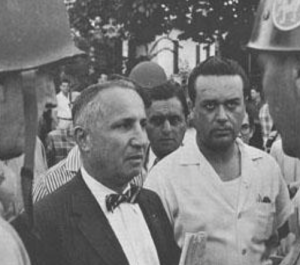
Benjamin Fine
After several degrees in journalism, Benjamin Fine started reporting as an education correspondent for The New York Times in 1938. He received a Ph.D. from Columbia in 1941 and became the education editor for the respected newspaper. He was the first president of the Education Writers Association. On September 4, 1957, he found himself covering the attempt to desegregate a Little Rock high school. While interviewing, Fine sat down next to a distraught Elizabeth Eckford, one of the Little Rock Nine, and told her, “Don’t let them see you cry.” It was possibly this story that pushed him to seek a new career in academia after 17 years with The Times. In 1958, he accepted the position as Dean of the Yeshiva University Graduate School of Education and Headmaster of the Sands Point (L.I.). County Day School, before founding Horizon School for Gifted Children in Key Biscayne, FL, in 1971. Even after retirement in 1974, Fine continued to contribute to the field of education by editing several newspapers, including The New York Times, and by publishing several books on the topic.
Listen to "Requirements of Creative Teaching; The Art of Innovation in Undergraduates"
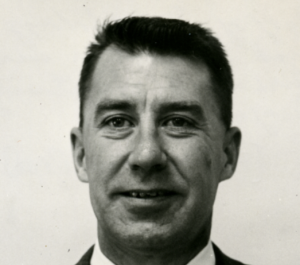
Frank Williams
Frank Williams earned his bachelor’s degree in engineering from the University of Colorado, an M.A. and Ed.S. at Stanford University, and his Ph.D. from the University of Utah. Williams originated and directed the first three California Creative Education Institutes from 1960 to 1962 and worked closely with Dr. Calvin W. Taylor as a research associate on four of the Utah Creativity Conferences in 1963, 1965, and 1970. Williams became the director of the Creativity and National Schools project at Macalester College and focused his work on training in-service teachers to develop creativity in school classrooms. Williams was an education consultant and author of numerous books on creativity and education.
Listen to "What Education Can Do to Develop Creative Behavior"